Peptide library
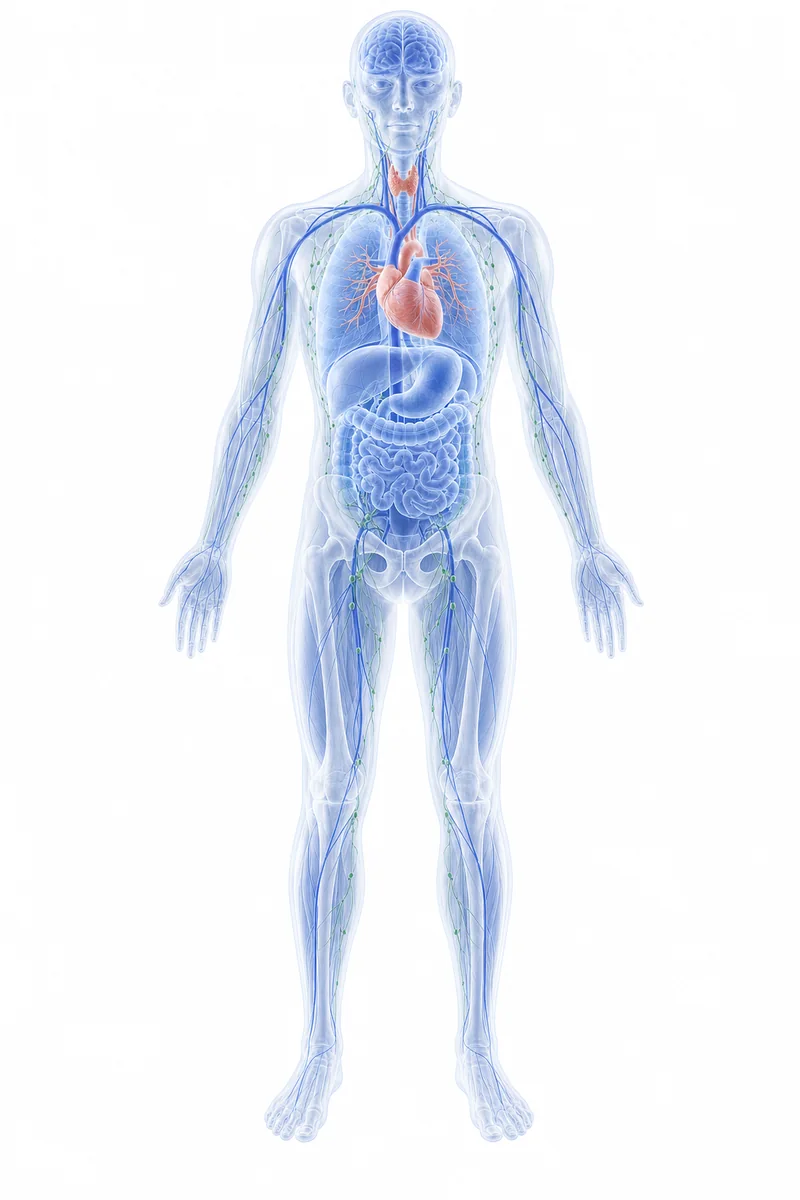
Every compound in our stories had to come from somewhere, and this library is the index to them. It gathers research peptides and the peptide medicines that grew out of them, sorted by the part of the body researchers have studied them in. Each entry gives a class, a regulatory status checked against official records and dated, and a couple of sentences on what the compound is and where the work on it has been done. Some entries lead to a Peptidesfact story about how the compound came to be studied; others lead to one of our sister publications. The figure is a way in: choose a part of the body, or search for a name you have come across.
Status key
- Approved medicine 84
- Approved by the FDA and/or the EMA for at least one medical use.
- In clinical trials 28
- Tested in human clinical trials, but not approved by a major regulator.
- Research compound 25
- Preclinical or experimental. Not approved for human use anywhere major.
- Cosmetic ingredient 17
- Used as an ingredient in topical cosmetics rather than as a medicine.
154 peptides
Brain & sleep
Peptides studied for effects on neurons, neurotransmission, pain signalling, sleep regulation and neurodevelopmental disorders.
Cerebrolysin
In clinical trialsAlso known as FPF-1070
Porcine brain-derived peptide mixture · peptide mixture
Mixture of low-molecular-weight peptides and amino acids prepared from pig brain. Investigated in clinical trials after stroke, brain injury and in dementia, with mixed results.
Status: Licensed in some countries; not FDA- or EMA-approved; trials ongoing
Sources: clinicaltrials.gov (1), clinicaltrials.gov (2)
Davunetide
In clinical trialsAlso known as NAP, AL-108, NAPVSIPQ
Neuroprotective octapeptide derived from ADNP · 8 aa
Eight-residue fragment (NAPVSIPQ) of activity-dependent neuroprotective protein. Investigated in tauopathy and cognitive-impairment trials, without a positive pivotal result.
Status: Phase 2/3 in progressive supranuclear palsy completed; not approved
Sources: clinicaltrials.gov (1), clinicaltrials.gov (2)
Dihexa
Research compoundAlso known as PNB-0408, N-hexanoic-Tyr-Ile-(6)-aminohexanoic amide
Angiotensin IV-derived peptidomimetic · modified 3-residue peptide
Small modified peptide from Washington State University, derived from angiotensin IV. Studied in rodent models of memory impairment for proposed HGF/c-Met activity.
Status: Preclinical only; not approved for any use
On Peptides Facts, our sister site: Dihexa: The HGF/c-Met Claim and the Distance Between a Rodent Model and a Person
Sources: pubmed.ncbi.nlm.nih.gov (1), pubmed.ncbi.nlm.nih.gov (2)
DSIP
Research compoundAlso known as Delta sleep-inducing peptide, Emideltide
Neuropeptide (nonapeptide) · 9 aa
Nine-residue peptide isolated in 1977 from rabbits in induced sleep. Sleep studies since then have given inconsistent results, and no receptor or gene has been confirmed.
Status: Not approved anywhere; receptor and gene still unidentified
On Peptides Facts, our sister site: DSIP: A 1977 Discovery With a Thin and Contradictory Evidence Record
Sources: pubmed.ncbi.nlm.nih.gov (1), pubmed.ncbi.nlm.nih.gov (2)
Epitalon
Research compoundAlso known as Epithalon, Epithalone, AEDG peptide
Synthetic tetrapeptide (Ala-Glu-Asp-Gly) · 4 aa
Tetrapeptide modelled on epithalamin, a pineal gland extract. Studied in cells and rodents for telomerase activity and ageing, mostly by one St Petersburg group.
Status: Not approved by FDA or EMA; evidence mostly from one research group
Also listed under Skin & aging
On Peptides Facts, our sister site: Epitalon and Telomerase: An Assessment of the Evidence Base
Sources: pubmed.ncbi.nlm.nih.gov (1), pubmed.ncbi.nlm.nih.gov (2)
NNZ-2591
In clinical trialsAlso known as cyclo-glycyl-2-allylproline
Synthetic cyclic dipeptide (cyclic glycine-proline analogue) · cyclic dipeptide
Analogue of cyclic glycine-proline, a metabolite of IGF-1. Under clinical investigation in rare neurodevelopmental disorders, including Phelan-McDermid and Pitt Hopkins syndromes.
Status: Phase 3 in Phelan-McDermid syndrome (Neuren), 2025–2026
Sources: clinicaltrials.gov (1), clinicaltrials.gov (2)
Selank
Research compoundAlso known as TP-7, TKPRPGP
Synthetic tuftsin analogue (heptapeptide) · 7 aa
Tuftsin (TKPR) extended with Pro-Gly-Pro for stability. Studied in rodent anxiety and stress models and in cell work on GABA-related gene expression.
Status: Registered as a medicine in Russia; not approved by FDA or EMA
Also listed under Immune & defense
Our article: The Moscow Institute That Made Peptides for the Mind
Sources: pubmed.ncbi.nlm.nih.gov (1), pubmed.ncbi.nlm.nih.gov (2)
Semax
Research compoundAlso known as ACTH(4–7)-Pro-Gly-Pro, MEHFPGP
Synthetic ACTH(4–7) analogue with a Pro-Gly-Pro tail · 7 aa
Heptapeptide developed in Moscow from a fragment of ACTH. Studied mainly in Russian literature, in rodent stroke models, BDNF expression and cognition.
Status: Registered as a medicine in Russia; not approved by FDA or EMA
Our article: The Moscow Institute That Made Peptides for the Mind
Sources: pubmed.ncbi.nlm.nih.gov (1), pubmed.ncbi.nlm.nih.gov (2)
Trofinetide
Approved medicineAlso known as NNZ-2566, Daybue
Synthetic analogue of the tripeptide GPE (IGF-1 fragment) · 3 aa (modified)
Modified version of glycine-proline-glutamate, a fragment cleaved from IGF-1. Approved for the treatment of Rett syndrome in adults and children aged 2 and over.
Status: Approved as Daybue (FDA 2023) and Daybu (EMA 2026)
Sources: accessdata.fda.gov, ema.europa.eu
Ziconotide
Approved medicineAlso known as ω-conotoxin MVIIA, SNX-111, Prialt
Synthetic cone-snail ω-conotoxin (N-type calcium channel blocker) · 25 aa
Synthetic copy of a peptide from the venom of the marine snail Conus magus. Approved for severe chronic pain when other treatments are unsuitable.
Status: Approved as Prialt (FDA 2004; EMA 2005)
Sources: accessdata.fda.gov, ema.europa.eu
Skin & aging
Peptides researched in pigmentation, wound and skin-infection models, cosmetic science and cellular ageing.
Acetyl hexapeptide-8
Cosmetic ingredientAlso known as Argireline, Acetyl hexapeptide-3
Synthetic SNAP-25-derived hexapeptide · 6 aa
Acetylated six-residue fragment of the SNAP-25 protein, sold as Argireline. Studied in vitro for interference with SNARE complex assembly; used in anti-wrinkle cosmetics.
Status: Cosmetic ingredient (INCI); not a medicine
Sources: pubmed.ncbi.nlm.nih.gov (1), pubmed.ncbi.nlm.nih.gov (2)
Acetyl octapeptide-3
Cosmetic ingredientAlso known as SNAP-8
Synthetic SNAP-25-derived octapeptide · 8 aa
Eight-residue extension of the Argireline sequence, marketed as SNAP-8. Designed to mimic the N-terminus of SNAP-25; included in anti-wrinkle cosmetic formulations.
Status: Cosmetic ingredient (INCI); not a medicine
Source: pubmed.ncbi.nlm.nih.gov
Acetyl tetrapeptide-5
Cosmetic ingredientAlso known as Eyeseryl
Synthetic acetylated tetrapeptide · 4 aa
Short acetylated peptide sold as Eyeseryl for under-eye products. In vitro data concern glycation and fluid accumulation; independent clinical evidence is sparse.
Status: Cosmetic ingredient (INCI); not a medicine
Source: pubmed.ncbi.nlm.nih.gov
Afamelanotide
Approved medicineAlso known as Melanotan I, MT-I, [Nle4,D-Phe7]-α-MSH, CUV1647, Scenesse
α-MSH analogue (melanocortin-1 receptor agonist) · 13 aa
Linear α-MSH analogue originally called Melanotan I. Approved to increase pain-free light exposure in adults with erythropoietic protoporphyria (EPP).
Status: Approved as Scenesse (EMA 2014; FDA 2019)
On Peptides Facts, our sister site: Afamelanotide: MC1R Agonism and Two Phase 3 Trials
Sources: ema.europa.eu, accessdata.fda.gov
Bacitracin
Approved medicineAlso known as Bacitracin A
Cyclic polypeptide antibiotic · 12 residues (cyclic)
Mixture of cyclic peptides from Bacillus licheniformis that blocks bacterial cell-wall synthesis. An approved antibiotic, today found mostly in first-aid preparations.
Status: FDA-approved since 1948 (Baciguent and generics)
Also listed under Immune & defense
Source: accessdata.fda.gov
Carnosine
Cosmetic ingredientAlso known as L-carnosine, β-alanyl-L-histidine
Endogenous dipeptide (β-alanyl-L-histidine) · 2 aa
Dipeptide abundant in skeletal muscle and brain. Studied for pH buffering, metal binding and anti-glycation activity; also used as an antioxidant in cosmetic formulations.
Status: Cosmetic and food-supplement ingredient; not an approved medicine
Also listed under Bones & muscles
Sources: pubmed.ncbi.nlm.nih.gov (1), pubmed.ncbi.nlm.nih.gov (2)
Difelikefalin
Approved medicineAlso known as CR845, Korsuva, Kapruvia
Peripheral kappa-opioid receptor agonist (D-amino-acid peptide) · 4 aa (D-amino acids)
Peptide of four D-amino acids designed to stay largely outside the central nervous system. Approved for moderate-to-severe itch of chronic kidney disease in haemodialysis.
Status: Approved as Korsuva (FDA 2021) and Kapruvia (EMA 2022)
Sources: accessdata.fda.gov, ema.europa.eu
Dipeptide diaminobutyroyl benzylamide diacetate
Cosmetic ingredientAlso known as Syn-Ake, Snake-venom-mimetic peptide
Synthetic dipeptide derivative (waglerin-1 mimetic) · dipeptide derivative
Small molecule modelled on waglerin-1, a temple-viper venom peptide, sold as Syn-Ake. Reported in vitro to act on muscle nicotinic receptors; used in cosmetics.
Status: Cosmetic ingredient (INCI); not a medicine
Source: pubmed.ncbi.nlm.nih.gov
Ecallantide
Approved medicineAlso known as DX-88, Kalbitor
Recombinant plasma kallikrein inhibitor (Kunitz-domain protein) · 60 aa
60-residue protein selected by phage display to block plasma kallikrein and bradykinin release. Approved for acute attacks of hereditary angioedema.
Status: Approved as Kalbitor (FDA 2009)
Also listed under Immune & defense
Source: accessdata.fda.gov
GHK-Cu
Cosmetic ingredientAlso known as Copper tripeptide-1, Copper peptide, Glycyl-L-histidyl-L-lysine copper, Prezatide copper
Copper-binding tripeptide (Gly-His-Lys) · 3 aa + copper
Naturally occurring tripeptide, first found in human plasma, that binds copper(II). Studied in wound-healing models and cell gene-expression work; widely used in skincare.
Status: Listed cosmetic ingredient (copper tripeptide-1); not a medicine
Our article: The Biochemist and the Blue Copper Tripeptide
Sources: pubmed.ncbi.nlm.nih.gov (1), pubmed.ncbi.nlm.nih.gov (2)
Glutathione
Cosmetic ingredientAlso known as GSH, γ-L-glutamyl-L-cysteinylglycine, L-glutathione
Endogenous antioxidant tripeptide (γ-Glu-Cys-Gly) · 3 aa
The main thiol antioxidant inside human cells. Reviewed for effects on melanin synthesis in small skin-lightening studies, where evidence remains limited and inconsistent.
Status: Cosmetic and supplement ingredient; not an approved skin medicine
Also listed under Immune & defense
Sources: pubmed.ncbi.nlm.nih.gov (1), pubmed.ncbi.nlm.nih.gov (2)
Hexapeptide-9
Cosmetic ingredientAlso known as Collaxyl
Synthetic collagen-derived hexapeptide · 6 aa
Repeated Gly-Pro-Gln motif from collagen, sold as Collaxyl. Studied in skin-cell cultures for extracellular-matrix gene expression and in small cosmetic trials.
Status: Cosmetic ingredient (INCI); not a medicine
Source: pubmed.ncbi.nlm.nih.gov
Icatibant
Approved medicineAlso known as HOE 140, Firazyr
Bradykinin B2 receptor antagonist (decapeptide) · 10 aa
Synthetic decapeptide with five non-natural residues that blocks the bradykinin B2 receptor. Approved for acute attacks of hereditary angioedema.
Status: Approved as Firazyr (EMA 2008; FDA 2011)
Also listed under Immune & defense
Sources: ema.europa.eu, accessdata.fda.gov
LTX-315
In clinical trialsAlso known as Ruxotemitide
Oncolytic cationic peptide · 9 aa
Nine-residue membrane-disrupting peptide derived from lactoferricin. Investigated in early-phase cancer trials alongside checkpoint inhibitors and cell therapy.
Status: Phase 2 in melanoma and sarcoma (Lytix Biopharma); not approved
Also listed under Immune & defense
Sources: clinicaltrials.gov (1), clinicaltrials.gov (2)
Melanotan II
Research compoundAlso known as MT-II, MT-2
Cyclic α-MSH analogue (non-selective melanocortin agonist) · 7 aa (cyclic)
Cyclic analogue made at the University of Arizona in the 1990s that acts on several melanocortin receptors. Case reports describe adverse events with unlicensed use.
Status: Never approved; regulators have issued safety warnings
Also listed under Sexual & reproductive
Our article: The Arizona Lab and the Drug That Escaped
Sources: pubmed.ncbi.nlm.nih.gov (1), pubmed.ncbi.nlm.nih.gov (2)
Nonapeptide-1
Cosmetic ingredientAlso known as Melanostatine-5
Synthetic α-MSH-antagonist nonapeptide · 9 aa
Nine-residue peptide sold as Melanostatine-5, designed to compete with α-MSH at the MC1 receptor. Studied in melanocyte cultures; used in brightening cosmetics.
Status: Cosmetic ingredient (INCI); not a medicine
Source: pubmed.ncbi.nlm.nih.gov
Palmitoyl hexapeptide-12
Cosmetic ingredientAlso known as Pal-VGVAPG, Biopeptide EL
Palmitoylated elastin-derived hexapeptide (Pal-VGVAPG) · 6 aa + palmitoyl
VGVAPG is a repeating elastin sequence that acts as a matrikine in cell studies. The palmitoylated form is used in cosmetics marketed for skin firmness.
Status: Cosmetic ingredient (INCI); not a medicine
Source: pubmed.ncbi.nlm.nih.gov
Palmitoyl pentapeptide-4
Cosmetic ingredientAlso known as Matrixyl, Pal-KTTKS, Palmitoyl pentapeptide-3
Palmitoylated collagen-fragment pentapeptide (Pal-KTTKS) · 5 aa + palmitoyl
KTTKS, a sequence from type I procollagen, linked to palmitic acid to aid skin penetration. Studied in fibroblast cultures and small cosmetic trials on photoaged skin.
Status: Cosmetic ingredient (INCI); not a medicine
Source: pubmed.ncbi.nlm.nih.gov
Palmitoyl tetrapeptide-7
Cosmetic ingredientAlso known as Pal-GQPR, Palmitoyl tetrapeptide-3
Palmitoylated tetrapeptide (Pal-GQPR) · 4 aa + palmitoyl
Fragment related to immunoglobulin G, combined with palmitoyl tripeptide-1 in Matrixyl 3000. Supplier data concern interleukin-6 release in cultured skin cells.
Status: Cosmetic ingredient (INCI); not a medicine
Source: pubmed.ncbi.nlm.nih.gov
Palmitoyl tripeptide-1
Cosmetic ingredientAlso known as Pal-GHK, Palmitoyl oligopeptide
Palmitoylated GHK tripeptide · 3 aa + palmitoyl
GHK linked to palmitic acid, without copper, to increase lipophilicity. A component of Matrixyl 3000; studied as a collagen-signalling matrikine in fibroblast cultures.
Status: Cosmetic ingredient (INCI); not a medicine
Sources: pubmed.ncbi.nlm.nih.gov (1), pubmed.ncbi.nlm.nih.gov (2)
Palmitoyl tripeptide-38
Cosmetic ingredientAlso known as Matrixyl synthe'6
Palmitoylated modified tripeptide (Pal-KMO2K) · 3 aa + palmitoyl
Lys-Met(O2)-Lys sequence with an oxidised methionine, sold as Matrixyl synthe'6. Supplier studies examine matrix-protein synthesis; found in multi-ingredient creams.
Status: Cosmetic ingredient (INCI); not a medicine
Source: pubmed.ncbi.nlm.nih.gov
Pentapeptide-18
Cosmetic ingredientAlso known as Leuphasyl
Synthetic enkephalin-like pentapeptide · 5 aa
Peptide modelled on enkephalins and sold as Leuphasyl. Proposed to reduce neuronal excitability in cell assays; often paired with acetyl hexapeptide-8 in cosmetics.
Status: Cosmetic ingredient (INCI); not a medicine
Source: pubmed.ncbi.nlm.nih.gov
sh-Oligopeptide-1
Cosmetic ingredientAlso known as Oligopeptide-1, Epidermal growth factor (EGF), rh-EGF
Recombinant human epidermal growth factor (53 aa) · 53 aa
INCI name for recombinant human EGF used in skincare. EGF is studied in wound repair; cosmetic research focuses on formulation stability and skin delivery.
Status: Cosmetic ingredient (INCI); not a medicine
Sources: pubmed.ncbi.nlm.nih.gov (1), pubmed.ncbi.nlm.nih.gov (2)
Tripeptide-10 citrulline
Cosmetic ingredientAlso known as Decorinyl
Synthetic decorin-mimetic tetrapeptide · 4 residues
Lys-Asp-Ile-citrulline sequence sold as Decorinyl, modelled on decorin's collagen-binding site. Studied in vitro for the organisation of collagen fibrils.
Status: Cosmetic ingredient (INCI); not a medicine
Sources: pubmed.ncbi.nlm.nih.gov (1), pubmed.ncbi.nlm.nih.gov (2)
Digestive & weight
Peptides studied in appetite and incretin signalling, gut motility and absorption, liver fat and gastrointestinal tumours.
Amycretin
In clinical trialsAlso known as NN9487, NNC0487-0111
Unimolecular GLP-1 and amylin receptor agonist · unimolecular peptide
Single peptide designed to activate both GLP-1 and amylin receptors, studied in two formulations. Phase 3 trials in obesity and related conditions began in 2026.
Status: Phase 3 (AMAZE programme, Novo Nordisk), started 2026
Also listed under Hormones & metabolism
On Peptides Facts, our sister site: Amycretin: One Molecule, Two Receptor Families
Sources: clinicaltrials.gov (1), clinicaltrials.gov (2)
AOD9604
Research compoundAlso known as AOD-9604, Tyr-hGH(177–191), Advanced Obesity Drug 9604
Modified hGH fragment (176–191 analogue) · 16 aa
16-residue peptide based on the C-terminal region of growth hormone. Studied for fat metabolism in obese mice; later human trials did not show meaningful weight loss.
Status: Obesity programme discontinued after human trials; not approved as a medicine
Also listed under Hormones & metabolism
On Peptides Facts, our sister site: AOD9604: A Compound That Worked in Mice and Failed in People
Source: pubmed.ncbi.nlm.nih.gov
Apraglutide
In clinical trialsAlso known as FE 203799
Long-acting GLP-2 analogue · 33 aa
GLP-2 analogue with modifications that slow clearance. Evaluated in the Phase 3 STARS trial in short bowel syndrome with intestinal failure; a further Phase 3 began in 2026.
Status: Phase 3 in short bowel syndrome (VectivBio/Ironwood); not approved
Sources: clinicaltrials.gov (1), clinicaltrials.gov (2)
BPC-157
Research compoundAlso known as Body Protection Compound 157, PL 14736, Bepecin
Synthetic gastric pentadecapeptide · 15 aa
15-residue sequence derived from a protein in human gastric juice. Studied mainly in rodent models of gut, tendon and muscle injury, with most papers from one research group.
Status: Not approved anywhere; human data limited to small early studies
Also listed under Bones & muscles
Our article: The Zagreb School and a Literature With One Centre
Sources: pubmed.ncbi.nlm.nih.gov (1), pubmed.ncbi.nlm.nih.gov (2)
Cagrilintide
In clinical trialsAlso known as NN9838, AM833
Long-acting amylin analogue · 37 aa
Acylated analogue of amylin, a hormone co-secreted with insulin, acting on amylin and calcitonin receptors. In Phase 3 trials for obesity, alone and as part of CagriSema.
Status: Phase 3 alone and with semaglutide (Novo Nordisk); not approved
On Peptides Facts, our sister site: Amylin Receptor Agonists: Cagrilintide and a Second Satiety Pathway
Sources: clinicaltrials.gov (1), clinicaltrials.gov (2)
CagriSema
In clinical trialsAlso known as Cagrilintide/semaglutide, NN9838 + NN9535
Fixed combination of an amylin analogue and a GLP-1 agonist · two-peptide combination
Co-formulation of cagrilintide and semaglutide. Phase 3 REDEFINE trials compare it with each component and with placebo in obesity and in type 2 diabetes.
Status: Phase 3 (REDEFINE, Novo Nordisk); not approved as of Oct 2026
Also listed under Hormones & metabolism
On Peptides Facts, our sister site: CagriSema and REDEFINE: What Adding Amylin Agonism Bought Over Semaglutide Alone
Sources: clinicaltrials.gov (1), clinicaltrials.gov (2)
Gallium Ga-68 dotatate
Approved medicineAlso known as 68Ga-DOTATATE, NETSPOT
Radiolabelled somatostatin analogue (PET imaging agent) · 8 aa + chelator
Octreotate peptide carrying a DOTA chelator loaded with gallium-68. Approved for PET imaging to locate somatostatin receptor-positive neuroendocrine tumours.
Status: Approved as NETSPOT (FDA 2016)
Source: accessdata.fda.gov
Glepaglutide
In clinical trialsAlso known as ZP1848, Zeydovio
Long-acting GLP-2 analogue · 39 aa
GLP-2 analogue from Zealand Pharma designed for slow release. Studied in Phase 3 trials in short bowel syndrome; new Phase 3 trials began in 2025–2026.
Status: CHMP positive opinion (Zeydovio) Sept 2026; EU approval pending
Sources: ema.europa.eu, clinicaltrials.gov
HGH Fragment 176-191
Research compoundAlso known as Fragment 176-191, Frag 176-191, hGH(176–191)
C-terminal growth hormone fragment · 16 aa
Synthetic copy of residues 176–191 of human growth hormone. Early rodent work linked this region to lipid metabolism, without the growth-promoting effects of the full hormone.
Status: Research compound; not approved; prohibited in sport (WADA)
Also listed under Hormones & metabolism
Source: pubmed.ncbi.nlm.nih.gov
KPV
Research compoundAlso known as Lys-Pro-Val, α-MSH(11–13)
α-MSH C-terminal tripeptide (Lys-Pro-Val) · 3 aa
The last three residues of α-melanocyte-stimulating hormone. Studied in cell and mouse models of intestinal and skin inflammation, including uptake via the PepT1 transporter.
Status: Preclinical research compound; not approved
Also listed under Immune & defense, Skin & aging
On Peptides Facts, our sister site: KPV: A Tripeptide From the C-Terminus of Alpha-MSH
Source: pubmed.ncbi.nlm.nih.gov
Lanreotide
Approved medicineAlso known as Somatuline
Somatostatin analogue (cyclic octapeptide) · 8 aa (cyclic)
Cyclic somatostatin analogue that self-assembles into nanotubes, giving a long-acting formulation. Approved for acromegaly, GEP-NETs and carcinoid syndrome.
Status: Approved as Somatuline Depot (FDA 2007)
Also listed under Hormones & metabolism
Source: accessdata.fda.gov
Larazotide acetate
In clinical trialsAlso known as AT-1001, INN-202
Tight-junction regulator (octapeptide) · 8 aa
Eight-residue peptide derived from the zonula occludens toxin of Vibrio cholerae. Studied as a gut-barrier modulator in coeliac disease; the Phase 3 programme ended early.
Status: Phase 3 in coeliac disease terminated (9 Meters); not approved
Also listed under Immune & defense
Source: clinicaltrials.gov
Linaclotide
Approved medicineAlso known as Linzess, Constella
Guanylate cyclase-C agonist (14-residue peptide) · 14 aa
Peptide related to bacterial heat-stable enterotoxins that acts locally on the intestinal lining. Approved for IBS with constipation and chronic idiopathic constipation.
Status: Approved as Linzess (FDA 2012) and Constella (EMA 2012)
Sources: accessdata.fda.gov, ema.europa.eu
Liraglutide
Approved medicineAlso known as Victoza, Saxenda, NN2211
GLP-1 receptor agonist (acylated GLP-1 analogue) · 31 aa
First GLP-1 analogue to use fatty-acid acylation (a C16 chain on lysine) for albumin binding. Approved for type 2 diabetes and chronic weight management in adults and adolescents.
Status: Approved as Victoza (FDA 2010) and Saxenda (FDA 2014); generics exist
Also listed under Hormones & metabolism, Heart & blood
Our article: The Chemist Who Gave GLP-1 a Week
Sources: accessdata.fda.gov (1), accessdata.fda.gov (2)
Lutetium Lu-177 dotatate
Approved medicineAlso known as 177Lu-DOTATATE, Lutathera
Radiolabelled somatostatin analogue (radioligand therapy) · 8 aa + chelator
Same receptor-targeting peptide as Ga-68 dotatate, carrying the beta emitter lutetium-177. Approved for somatostatin receptor-positive gastroenteropancreatic neuroendocrine tumours.
Status: Approved as Lutathera (EMA 2017; FDA 2018)
Sources: ema.europa.eu, accessdata.fda.gov
Maridebart cafraglutide
In clinical trialsAlso known as MariTide, AMG 133
Antibody–peptide conjugate (GIPR antagonist + GLP-1 agonist) · antibody–peptide conjugate
Monoclonal antibody that blocks the GIP receptor, carrying two GLP-1 analogue peptides. Being evaluated in Phase 3 trials in obesity, with and without type 2 diabetes.
Status: Phase 3 (MARITIME programme, Amgen); not approved
Also listed under Hormones & metabolism
On Peptides Facts, our sister site: Antibody-Peptide Conjugates: A Half-Life by Design
Source: clinicaltrials.gov
Mazdutide
In clinical trialsAlso known as LY3305677, IBI362
Dual glucagon and GLP-1 receptor agonist · oxyntomodulin analogue
Oxyntomodulin-like peptide licensed from Eli Lilly to Innovent. Phase 3 GLORY and DREAMS trials studied it in obesity and type 2 diabetes in Chinese adults.
Status: Approved in China (2025); not FDA- or EMA-approved; trials ongoing
Also listed under Hormones & metabolism
On Peptides Facts, our sister site: Mazdutide GLORY-1: Approved in One Country Only
Sources: clinicaltrials.gov (1), clinicaltrials.gov (2)
Octreotide
Approved medicineAlso known as SMS 201-995, Sandostatin, Mycapssa
Somatostatin analogue (cyclic octapeptide) · 8 aa (cyclic)
Eight-residue analogue that keeps the receptor-binding core of somatostatin but lasts far longer. Approved for acromegaly and symptoms of carcinoid and VIP-secreting tumours.
Status: Approved as Sandostatin (FDA 1988); later forms and generics
Also listed under Hormones & metabolism
Our article: From a Million Brains to a Usable Drug
Source: accessdata.fda.gov
Pemvidutide
In clinical trialsAlso known as ALT-801
Dual glucagon and GLP-1 receptor agonist · 29 aa (lipidated)
Peptide with a balanced 1:1 glucagon-to-GLP-1 receptor design, aimed at liver fat. Studied in MASH, alcohol-associated liver disease and obesity.
Status: Phase 3 in MASH started 2026 (Altimmune); not approved
Also listed under Hormones & metabolism
Sources: clinicaltrials.gov (1), clinicaltrials.gov (2)
Petrelintide
In clinical trialsAlso known as ZP8396
Long-acting amylin analogue · amylin analogue
Amylin analogue engineered for chemical stability in solution, from Zealand Pharma. Studied in obesity, alone and in combination with incretin-based peptides.
Status: Phase 3 started 2026 (Roche/Zealand Pharma); not approved
Sources: clinicaltrials.gov (1), clinicaltrials.gov (2)
Plecanatide
Approved medicineAlso known as SP-304, Trulance
Uroguanylin analogue (guanylate cyclase-C agonist) · 16 aa
16-residue analogue of the gut hormone uroguanylin with one substitution. Approved for chronic idiopathic constipation and IBS with constipation in adults.
Status: Approved as Trulance (FDA 2017)
Source: accessdata.fda.gov
PN-943
In clinical trialsAlso known as Oral α4β7 integrin antagonist peptide
Gut-restricted α4β7 integrin antagonist peptide · cyclic peptide
Cyclic peptide designed to block α4β7 integrin in the gut wall while staying out of the circulation. Investigated in a Phase 2 trial in moderate-to-severe ulcerative colitis.
Status: Phase 2 in ulcerative colitis completed (Protagonist); not approved
Also listed under Immune & defense
Source: clinicaltrials.gov
Retatrutide
In clinical trialsAlso known as LY3437943, GGG tri-agonist
Triple GIP, GLP-1 and glucagon receptor agonist · 39 aa
Single 39-residue peptide engineered to activate three hormone receptors. Being evaluated in Phase 3 trials in obesity, type 2 diabetes, knee osteoarthritis and other conditions.
Status: Phase 3 (TRIUMPH programme, Eli Lilly); not yet approved
Also listed under Hormones & metabolism
On Peptides Facts, our sister site: Retatrutide: Triple Glucagon, GIP and GLP-1 Receptor Agonism, and the Balance It Has to Strike
Sources: clinicaltrials.gov (1), clinicaltrials.gov (2)
Semaglutide
Approved medicineAlso known as Ozempic, Wegovy, Rybelsus, NN9535
GLP-1 receptor agonist (acylated GLP-1 analogue) · 31 aa
GLP-1 analogue with a C18 fatty diacid chain that binds albumin. Approved for type 2 diabetes, chronic weight management and cardiovascular risk reduction in defined patients.
Status: Approved as Ozempic (FDA 2017), Rybelsus (2019) and Wegovy (2021)
Also listed under Hormones & metabolism, Heart & blood
Our article: The Patent Cliff and the First Generic Peptide Blockbuster
Sources: accessdata.fda.gov (1), accessdata.fda.gov (2)
Setmelanotide
Approved medicineAlso known as RM-493, Imcivree
Melanocortin-4 receptor agonist (cyclic peptide) · 8 aa (cyclic)
Cyclic MC4R agonist acting downstream of the leptin–melanocortin pathway. Approved for obesity due to specific genetic defects (POMC, PCSK1, LEPR) and Bardet-Biedl syndrome.
Status: Approved as Imcivree (FDA 2020; EMA 2021)
Also listed under Hormones & metabolism
On Peptides Facts, our sister site: Setmelanotide: MC4R Agonism in Monogenic Obesity
Sources: accessdata.fda.gov, ema.europa.eu
Sincalide
Approved medicineAlso known as CCK-8, Kinevac
Cholecystokinin C-terminal octapeptide (CCK-8) · 8 aa
Synthetic form of the active C-terminal fragment of cholecystokinin. Approved as a diagnostic agent to stimulate gallbladder contraction and pancreatic secretion.
Status: Approved as Kinevac (FDA 1976)
Source: accessdata.fda.gov
Survodutide
In clinical trialsAlso known as BI 456906
Dual glucagon and GLP-1 receptor agonist · 29 aa
Acylated peptide that activates glucagon and GLP-1 receptors. In Phase 3 trials for obesity and for metabolic dysfunction-associated steatohepatitis (MASH), including cirrhosis.
Status: Phase 3 (SYNCHRONIZE, LIVERAGE; Boehringer Ingelheim); not approved
Also listed under Hormones & metabolism
On Peptides Facts, our sister site: Survodutide: Glucagon Receptor Agonism and the Liver Endpoint
Sources: clinicaltrials.gov (1), clinicaltrials.gov (2)
Teduglutide
Approved medicineAlso known as ALX-0600, Gattex, Revestive
GLP-2 analogue · 33 aa
33-residue GLP-2 analogue with one substitution that resists breakdown by DPP-4. Approved for short bowel syndrome in patients dependent on nutritional support.
Status: Approved as Revestive (EMA 2012) and Gattex (FDA 2012)
Sources: ema.europa.eu, accessdata.fda.gov
Terlipressin
Approved medicineAlso known as Terlivaz, Glypressin
Vasopressin analogue (prodrug of lysine vasopressin) · 12 aa
Lysine vasopressin with three extra glycines that are cleaved off in the body. Approved to improve kidney function in adults with hepatorenal syndrome with rapid decline.
Status: Approved as Terlivaz (FDA 2022); long used in Europe
Also listed under Heart & blood
Source: accessdata.fda.gov
Tirzepatide
Approved medicineAlso known as Mounjaro, Zepbound, LY3298176
Dual GIP and GLP-1 receptor agonist · 39 aa
39-residue peptide based on the GIP sequence, with a fatty diacid for albumin binding. Approved for type 2 diabetes, chronic weight management and obstructive sleep apnoea with obesity.
Status: Approved as Mounjaro (FDA 2022) and Zepbound (FDA 2023)
Also listed under Hormones & metabolism
On Peptides Facts, our sister site: Tirzepatide: Dual GIP and GLP-1 Receptor Agonism, and Why the Balance Is Uneven
Sources: accessdata.fda.gov (1), accessdata.fda.gov (2)
Immune & defense
Peptides investigated as antibacterials, antifungals, antivirals and modulators of innate and adaptive immunity.
ARA-290
In clinical trialsAlso known as Cibinetide, pHBSP (pyroglutamate helix B surface peptide)
Erythropoietin-derived non-haematopoietic peptide · 11 aa
11-residue peptide modelled on helix B of erythropoietin, designed to engage the innate repair receptor without stimulating red-cell production. Studied in small-fibre neuropathy.
Status: Phase 2 studies (sarcoidosis neuropathy, diabetes); not approved
Also listed under Brain & sleep
On Peptides Facts, our sister site: ARA-290: The Innate Repair Receptor and Phase 2 Data
Sources: clinicaltrials.gov (1), clinicaltrials.gov (2)
Aviptadil
In clinical trialsAlso known as Vasoactive intestinal peptide (VIP), VIP, RLF-100
Synthetic vasoactive intestinal peptide (VIP) · 28 aa
Synthetic form of VIP, a 28-residue neuropeptide with receptors on vessels, immune cells and lung tissue. Studied in acute lung injury, pulmonary hypertension and sarcoidosis.
Status: Phase 3 in COVID-19 respiratory failure; not FDA- or EMA-approved
Also listed under Digestive & weight
On Peptides Facts, our sister site: VIP: A 28-Residue Neuropeptide With Receptors Almost Everywhere
Sources: clinicaltrials.gov (1), clinicaltrials.gov (2)
Colistin
Approved medicineAlso known as Polymyxin E, Colistimethate sodium, Coly-Mycin M
Cyclic lipopeptide antibiotic (polymyxin) · 10 aa (cyclic lipopeptide)
Polymyxin closely related to polymyxin B, used clinically as its prodrug colistimethate. Approved for serious Gram-negative infections, including Pseudomonas in cystic fibrosis.
Status: Approved as Coly-Mycin M (FDA 1970) and Colobreathe (EMA 2012)
Sources: accessdata.fda.gov, ema.europa.eu
Cyclosporine
Approved medicineAlso known as Ciclosporin, Cyclosporin A, Sandimmune, Neoral
Cyclic undecapeptide calcineurin inhibitor · 11 aa (cyclic)
Fungal cyclic peptide that suppresses T-cell activation through calcineurin. Approved to prevent organ-transplant rejection and for certain autoimmune and eye conditions.
Status: Approved as Sandimmune (FDA 1983); later Neoral and generics
Source: accessdata.fda.gov
Dalbavancin
Approved medicineAlso known as Dalvance, Xydalba
Lipoglycopeptide antibiotic · lipoglycopeptide
Semi-synthetic glycopeptide with a lipophilic side chain and a very long half-life. Approved for acute bacterial skin and skin-structure infections caused by Gram-positive bacteria.
Status: Approved as Dalvance (FDA 2014) and Xydalba (EMA 2015)
Also listed under Skin & aging
Sources: accessdata.fda.gov, ema.europa.eu
Daptomycin
Approved medicineAlso known as Cubicin
Cyclic lipopeptide antibiotic · 13 aa (cyclic lipopeptide)
13-residue lipopeptide from Streptomyces roseosporus that depolarises Gram-positive bacterial membranes. Approved for complicated skin infections and S. aureus bacteraemia.
Status: Approved as Cubicin (FDA 2003; EMA 2006)
Also listed under Skin & aging, Heart & blood
Our article: The Antibiotic That Sat in a Drawer for Six Years
Sources: accessdata.fda.gov, ema.europa.eu
Echinocandins
Approved medicineAlso known as Caspofungin, Micafungin, Anidulafungin, Rezafungin
Cyclic lipohexapeptide antifungals · cyclic lipohexapeptides
Class of semi-synthetic cyclic peptides that block fungal β-(1,3)-glucan synthesis. Approved for invasive candidiasis and, for some members, aspergillosis.
Status: From caspofungin (Cancidas, FDA 2001) to rezafungin (Rezzayo, FDA 2023)
Also listed under Heart & blood
Sources: accessdata.fda.gov (1), accessdata.fda.gov (2)
Enfuvirtide
Approved medicineAlso known as T-20, Fuzeon
HIV fusion inhibitor (36-residue peptide) · 36 aa
Peptide copied from the gp41 envelope protein of HIV-1 that blocks viral fusion with cells. Approved for treatment-experienced HIV-1 infection as part of combination therapy.
Status: Approved as Fuzeon (FDA 2003; EMA 2003); US product discontinued
Our article: The Peptide That Needed Its Own Factory
Sources: accessdata.fda.gov, ema.europa.eu
Gramicidin
Approved medicineAlso known as Gramicidin D, Gramicidin A
Linear peptide antibiotic (alternating L/D residues) · 15 aa (alternating L/D)
15-residue peptide from Bacillus brevis that forms ion channels in bacterial membranes. Isolated in 1939, it was among the first antibiotics used clinically.
Status: FDA-approved only as part of combination antibiotic products
Also listed under Skin & aging
Our article: The Soil That Was Fed Bacteria: Gramicidin, 1939
Source: accessdata.fda.gov
LL-37
In clinical trialsAlso known as Cathelicidin LL-37, Human cathelicidin antimicrobial peptide, Ropocamptide
Human cathelicidin antimicrobial peptide · 37 aa
37-residue peptide cleaved from hCAP18, the only cathelicidin in humans. Studied for antimicrobial and immune-signalling roles in skin, airways and wound models.
Status: Small Phase 1/2 studies (wounds, melanoma); not approved
Also listed under Skin & aging
On Peptides Facts, our sister site: LL-37: The Human Cathelicidin
Sources: clinicaltrials.gov (1), clinicaltrials.gov (2)
Murepavadin
In clinical trialsAlso known as POL7080
Macrocyclic peptidomimetic antibiotic (LptD inhibitor) · 14 aa (cyclic)
Protegrin-inspired cyclic peptide that targets LptD, an outer-membrane protein of Pseudomonas aeruginosa. Phase 3 trials ended early over kidney-safety findings.
Status: Phase 3 in hospital pneumonia terminated (Polyphor); not approved
Sources: clinicaltrials.gov (1), clinicaltrials.gov (2)
Nangibotide
In clinical trialsAlso known as LR12, MOTREM
TREM-1 inhibitory peptide · 12 aa
12-residue peptide derived from TLT-1 that acts as a decoy for the TREM-1 receptor on innate immune cells. Investigated in septic shock and severe COVID-19.
Status: Phase 2b in septic shock (Inotrem); not approved
Sources: clinicaltrials.gov (1), clinicaltrials.gov (2)
Oritavancin
Approved medicineAlso known as Orbactiv, Kimyrsa, Tenkasi
Lipoglycopeptide antibiotic · lipoglycopeptide
Vancomycin-related lipoglycopeptide with an added hydrophobic group that also disrupts bacterial membranes. Approved for acute bacterial skin and skin-structure infections.
Status: Approved as Orbactiv (FDA 2014), Kimyrsa (FDA 2021) and in the EU (2015)
Also listed under Skin & aging
Sources: accessdata.fda.gov, ema.europa.eu
Polymyxin B
Approved medicineAlso known as Polymyxin B sulfate
Cyclic lipopeptide antibiotic (polymyxin) · 10 aa (cyclic lipopeptide)
Cationic lipopeptide from Paenibacillus polymyxa that disrupts the outer membrane of Gram-negative bacteria. An approved antibiotic, now reserved mostly for multidrug-resistant infections.
Status: FDA-approved (Aerosporin and generics; records from 1964)
Source: accessdata.fda.gov
Telavancin
Approved medicineAlso known as Vibativ
Lipoglycopeptide antibiotic · lipoglycopeptide
Semi-synthetic vancomycin derivative with a lipophilic tail. Approved for complicated skin infections and hospital-acquired pneumonia caused by susceptible S. aureus.
Status: Approved as Vibativ (FDA 2009); EU authorisation since withdrawn
Also listed under Skin & aging
Source: accessdata.fda.gov
Thymosin alpha-1
In clinical trialsAlso known as Thymalfasin, Tα1, Zadaxin
Thymic immunomodulatory peptide (28 aa) · 28 aa
N-terminally acetylated peptide first isolated from calf thymus extract. Studied in clinical trials in hepatitis B, sepsis and alongside cancer immunotherapy.
Status: Licensed as Zadaxin in some countries; not FDA- or EMA-approved
Our article: The Man Who Found a Hormone in a Gland Everyone Ignored
Sources: clinicaltrials.gov (1), clinicaltrials.gov (2)
Thymulin
Research compoundAlso known as Facteur thymique sérique (FTS), Zinc-thymulin
Zinc-dependent thymic nonapeptide · 9 aa
Nine-residue hormone secreted by thymic epithelial cells that needs zinc for activity. Studied in animal models of T-cell maturation, inflammation and neuroendocrine links.
Status: Preclinical research compound; not approved
Sources: pubmed.ncbi.nlm.nih.gov (1), pubmed.ncbi.nlm.nih.gov (2)
Vancomycin
Approved medicineAlso known as Vancocin
Glycopeptide antibiotic · glycopeptide (7-residue core)
Glycopeptide from Amycolatopsis orientalis that binds cell-wall precursors of Gram-positive bacteria. Approved for serious infections including MRSA and C. difficile diarrhoea.
Status: FDA-approved since 1958 (Vancocin); many generics
Also listed under Heart & blood
Our article: The Brown Liquid They Called Mississippi Mud
Sources: accessdata.fda.gov (1), accessdata.fda.gov (2)
Hormones & metabolism
Peptide hormones and analogues studied in glucose control, the growth hormone axis, pituitary–adrenal function and mitochondria.
Albiglutide
Approved medicineAlso known as Tanzeum, Eperzan
GLP-1 receptor agonist (albumin fusion protein) · GLP-1 dimer–albumin fusion
Two copies of a DPP-4-resistant GLP-1 analogue fused to human albumin. Approved for type 2 diabetes, then withdrawn by the manufacturer for commercial reasons.
Status: Approved as Tanzeum (FDA 2014) and Eperzan (EMA 2014); withdrawn 2018
Also listed under Digestive & weight
Sources: accessdata.fda.gov, ema.europa.eu
Corticotropin
Approved medicineAlso known as ACTH, Adrenocorticotropic hormone, Acthar Gel
Pituitary peptide hormone (ACTH, 39 aa) · 39 aa
39-residue hormone that drives cortisol release from the adrenal glands. Approved as a purified animal-derived gel for infantile spasms and several inflammatory conditions.
Status: Approved as Acthar Gel (FDA 1952); other products since
Our article: The Longest Chain Anyone Had Built
Source: accessdata.fda.gov
Cosyntropin
Approved medicineAlso known as Tetracosactide, ACTH(1–24), Cortrosyn, Synacthen
Synthetic ACTH(1–24) fragment · 24 aa
The first 24 residues of ACTH, which carry its full adrenal-stimulating activity. Approved as a diagnostic agent to test adrenal cortex function.
Status: Approved as Cortrosyn (FDA 1970)
Source: accessdata.fda.gov
Dasiglucagon
Approved medicineAlso known as ZP4207, Zegalogue
Glucagon analogue (stable in solution) · 29 aa
Glucagon with seven amino-acid substitutions that prevent fibril formation in solution. Approved for severe hypoglycaemia in people with diabetes aged 6 and over.
Status: Approved as Zegalogue (FDA 2021; EMA 2024)
Also listed under Digestive & weight
Sources: accessdata.fda.gov, ema.europa.eu
Desmopressin
Approved medicineAlso known as DDAVP, 1-deamino-8-D-arginine vasopressin
Synthetic vasopressin analogue (V2-selective) · 9 aa
Vasopressin modified in Prague in 1967 to keep its kidney action while largely losing its effect on vessels. Approved for diabetes insipidus, bed-wetting and some bleeding disorders.
Status: Approved as DDAVP (FDA 1978); many products since
Also listed under Heart & blood
Our article: The Prague Institute That Redesigned a Hormone
Source: accessdata.fda.gov
Dulaglutide
Approved medicineAlso known as Trulicity, LY2189265
GLP-1 receptor agonist (Fc fusion protein) · GLP-1 analogue–Fc fusion
Two GLP-1 analogue chains linked to a modified IgG4 Fc fragment. Approved for type 2 diabetes and to reduce major cardiovascular events in adults with type 2 diabetes.
Status: Approved as Trulicity (FDA 2014; EMA 2014)
Also listed under Digestive & weight
Sources: accessdata.fda.gov, ema.europa.eu
Efpeglenatide
In clinical trialsAlso known as HM11260C, LAPS-Exendin
Long-acting exendin-4 analogue (Fc conjugate) · exendin analogue–Fc conjugate
Exendin-4 analogue chemically linked to an antibody Fc fragment (Hanmi's LAPSCOVERY platform). Studied in the AMPLITUDE-O cardiovascular outcomes trial in type 2 diabetes.
Status: Phase 3 (AMPLITUDE programme, Sanofi/Hanmi); not approved
Also listed under Digestive & weight
Sources: clinicaltrials.gov (1), clinicaltrials.gov (2)
Elamipretide
Approved medicineAlso known as SS-31, MTP-131, Bendavia, Forzinity
Mitochondria-targeted tetrapeptide (cardiolipin binder) · 4 aa
Four-residue peptide (D-Arg-Dmt-Lys-Phe-NH2) that concentrates in the inner mitochondrial membrane. Approved to improve muscle strength in Barth syndrome; studied in other mitochondrial diseases.
Status: Accelerated approval as Forzinity (FDA 2025) for Barth syndrome
Also listed under Heart & blood, Bones & muscles
On Peptides Facts, our sister site: SS-31 and Elamipretide: Binding Cardiolipin
Sources: accessdata.fda.gov, clinicaltrials.gov
Exenatide
Approved medicineAlso known as Exendin-4, Byetta, Bydureon
GLP-1 receptor agonist (exendin-4) · 39 aa
Synthetic version of exendin-4, a peptide found in Gila monster saliva. The first approved GLP-1 receptor agonist, indicated for glycaemic control in type 2 diabetes.
Status: Approved as Byetta (FDA 2005) and Bydureon (FDA 2012)
Also listed under Digestive & weight
Our article: The Gila Monster and the GLP-1 Drugs
Sources: accessdata.fda.gov (1), accessdata.fda.gov (2)
Glucagon
Approved medicineAlso known as GlucaGen, Gvoke, Baqsimi
Pancreatic peptide hormone · 29 aa
29-residue hormone from pancreatic alpha cells that raises blood glucose via the liver. Approved for severe hypoglycaemia and as a diagnostic aid in gut imaging.
Status: FDA-approved since 1960; brands include GlucaGen, Gvoke and Baqsimi
Also listed under Digestive & weight
Our article: The Contaminant That Became a Hormone
Sources: accessdata.fda.gov (1), accessdata.fda.gov (2)
HGH (somatropin)
Approved medicineAlso known as Somatropin, Human growth hormone, rhGH, Genotropin, Norditropin, Humatrope
Recombinant human growth hormone (191 aa) · 191 aa
Pituitary hormone produced recombinantly since 1985, replacing cadaver-derived extracts. Approved for growth hormone deficiency, Turner syndrome and several other growth disorders.
Status: Recombinant GH approved by FDA since 1985; brands incl. Genotropin, Humatrope
Also listed under Bones & muscles
Our article: The Hormone Harvested From the Dead
Sources: accessdata.fda.gov, ema.europa.eu
Humanin
Research compoundAlso known as HN, HNG (S14G-humanin)
Mitochondrial-derived peptide (24 aa) · 24 aa
Peptide encoded in the mitochondrial 16S rRNA region, found in 2001 in a screen for factors protecting neurons from Alzheimer-related toxicity. Studied in cell and rodent models.
Status: Preclinical research compound; not approved
Also listed under Brain & sleep
Our article: The Genome Everyone Thought Was Finished
Sources: pubmed.ncbi.nlm.nih.gov (1), pubmed.ncbi.nlm.nih.gov (2)
Insulin and insulin analogues
Approved medicineAlso known as Insulin glargine, Insulin lispro, Insulin aspart, Insulin degludec, Humulin
Pancreatic peptide hormone and engineered analogues · 51 aa (two chains)
Two-chain, 51-residue hormone from pancreatic beta cells. Human insulin was the first recombinant medicine; engineered analogues change its onset and duration for diabetes treatment.
Status: Many FDA/EMA-approved products, e.g. Humulin (FDA 1982), Lantus (2000)
Our article: How Insulin Changed What a Drug Could Be
Sources: accessdata.fda.gov, ema.europa.eu
Lixisenatide
Approved medicineAlso known as Lyxumia, Adlyxin
GLP-1 receptor agonist (exendin-4 analogue) · 44 aa
Exendin-4 analogue with a six-lysine C-terminal extension. Approved for type 2 diabetes, alone and combined with insulin glargine; also tested in a Parkinson's disease trial.
Status: Approved as Lyxumia (EMA 2013) and Adlyxin (FDA 2016); also in Soliqua
Also listed under Digestive & weight
On Peptides Facts, our sister site: GLP-1 in Parkinson's: LixiPark Positive, Exenatide Null
Sources: ema.europa.eu, accessdata.fda.gov
Mecasermin
Approved medicineAlso known as Recombinant human IGF-1 (rhIGF-1), Increlex
Recombinant human IGF-1 · 70 aa
70-residue insulin-like growth factor 1 made by recombinant DNA. Approved for growth failure in children with severe primary IGF-1 deficiency.
Status: Approved as Increlex (FDA 2005; EMA 2007)
Also listed under Bones & muscles
Sources: accessdata.fda.gov, ema.europa.eu
MOTS-c
Research compoundAlso known as Mitochondrial open reading frame of the 12S rRNA-c
Mitochondrial-derived peptide (16 aa) · 16 aa
Peptide encoded within the mitochondrial 12S rRNA gene, described in 2015. Studied in mouse models of insulin resistance, exercise capacity and ageing; proposed to act via AMPK.
Status: Preclinical research compound; not approved
Also listed under Bones & muscles
Our article: The Genome Everyone Thought Was Finished
Sources: pubmed.ncbi.nlm.nih.gov (1), pubmed.ncbi.nlm.nih.gov (2)
NAD+
Research compoundAlso known as Nicotinamide adenine dinucleotide, β-NAD
Coenzyme (not a peptide) · not a peptide
Dinucleotide coenzyme central to redox reactions and a substrate for sirtuins and PARPs. Listed here for reference; studied in cell and animal models of age-related NAD+ decline.
Status: Not a peptide and not an approved medicine; sold as a research chemical
Sold by our own store: NAD+ at Greek Peptides (Europe)
Sources: pubmed.ncbi.nlm.nih.gov (1), pubmed.ncbi.nlm.nih.gov (2)
Pasireotide
Approved medicineAlso known as SOM230, Signifor
Multi-receptor somatostatin analogue (cyclic hexapeptide) · 6 aa (cyclic)
Cyclic hexapeptide that binds four of the five somatostatin receptor subtypes, notably SST5. Approved for Cushing's disease and acromegaly.
Status: Approved as Signifor (EMA 2012; FDA 2012)
Sources: ema.europa.eu, accessdata.fda.gov
Pegvisomant
Approved medicineAlso known as Somavert, B2036-PEG
Growth hormone receptor antagonist (PEGylated GH analogue) · 191 aa (PEGylated)
Growth hormone variant with nine substitutions that binds its receptor without activating it, plus PEG chains. Approved for acromegaly when other treatments are inadequate.
Status: Approved as Somavert (EMA 2002; FDA 2003)
Sources: ema.europa.eu, accessdata.fda.gov
Pramlintide
Approved medicineAlso known as Symlin, Amylin analogue
Amylin analogue · 37 aa
Analogue of human amylin with three proline substitutions that stop it aggregating. Approved as an add-on to mealtime insulin in type 1 and type 2 diabetes.
Status: Approved as Symlin (FDA 2005)
Also listed under Digestive & weight
Our article: The San Diego Company That Got There First
Source: accessdata.fda.gov
Secretin
Approved medicineAlso known as Human secretin, ChiRhoStim
Gastrointestinal peptide hormone · 27 aa
27-residue duodenal hormone, the first hormone to be discovered (1902), that triggers bicarbonate-rich pancreatic secretion. Approved as a diagnostic agent.
Status: Approved as SecreFlo (FDA 2002) and ChiRhoStim (FDA 2004)
Also listed under Digestive & weight
Our article: The Experiment That Named the Hormone
Sources: accessdata.fda.gov (1), accessdata.fda.gov (2)
Somapacitan
Approved medicineAlso known as Sogroya, NN8640
Long-acting growth hormone (albumin-binding) · 191 aa + albumin binder
Human growth hormone with one substitution and an attached albumin-binding side chain. Approved for growth hormone deficiency in children and adults.
Status: Approved as Sogroya (FDA 2020; EMA 2021)
Also listed under Bones & muscles
Sources: accessdata.fda.gov, ema.europa.eu
Tesamorelin
Approved medicineAlso known as TH9507, Egrifta
GHRH analogue (44 aa) · 44 aa
Full-length GHRH with a trans-3-hexenoyl group at the N-terminus for stability. Approved to reduce excess abdominal fat in adults with HIV-associated lipodystrophy.
Status: Approved as Egrifta (FDA 2010)
Also listed under Digestive & weight
On Peptides Facts, our sister site: Tesamorelin: A Stabilised GHRH Analogue and the Visceral Fat Endpoint
Source: accessdata.fda.gov
Bones & muscles
Peptides studied in bone remodelling, calcium balance, growth plates, neuromuscular signalling and muscle and tendon models.
Abaloparatide
Approved medicineAlso known as BA058, Tymlos, Eladynos
PTHrP(1–34) analogue · 34 aa
34-residue analogue of parathyroid hormone-related protein acting on the PTH1 receptor. Approved for osteoporosis at high fracture risk in postmenopausal women (and men in the US).
Status: Approved as Tymlos (FDA 2017) and Eladynos (EMA 2022)
Also listed under Hormones & metabolism
Sources: accessdata.fda.gov, ema.europa.eu
Calcitonin (salmon)
Approved medicineAlso known as Salmon calcitonin, Miacalcin
Calcitonin (salmon sequence, 32 aa) · 32 aa
Salmon calcitonin is more potent in humans than the human hormone. Approved for Paget's disease of bone, hypercalcaemia and, in some markets, postmenopausal osteoporosis.
Status: FDA-approved since 1978 (Calcimar, later Miacalcin)
Also listed under Hormones & metabolism
Sources: accessdata.fda.gov (1), accessdata.fda.gov (2)
CJC-1295 (with DAC)
Research compoundAlso known as DAC:GRF, CJC-1295 DAC
GHRH(1–29) analogue with Drug Affinity Complex · 30 aa + DAC linker
Modified GHRH(1–29) carrying a reactive linker that bonds covalently to circulating albumin, greatly extending half-life. Human studies recorded prolonged GH and IGF-1 elevation.
Status: Phase 2 trial terminated (ConjuChem); not approved
Also listed under Hormones & metabolism
On Peptides Facts, our sister site: CJC-1295, the Drug Affinity Complex, and the Half-Life That Defines It
Sources: clinicaltrials.gov, pubmed.ncbi.nlm.nih.gov
CJC-1295 (without DAC)
Research compoundAlso known as Modified GRF (1-29), Mod GRF 1-29, Tetrasubstituted GRF(1–29)
Tetrasubstituted GHRH(1–29) analogue (Mod GRF 1-29) · 29 aa
GHRH(1–29) with four substitutions that resist enzymatic breakdown, but no albumin-binding linker. Despite the shared name it is a different molecule from CJC-1295 with DAC.
Status: Research compound; never developed as a medicine
Also listed under Hormones & metabolism
On Peptides Facts, our sister site: CJC-1295, the Drug Affinity Complex, and the Half-Life That Defines It
Source: pubmed.ncbi.nlm.nih.gov
Etelcalcetide
Approved medicineAlso known as AMG 416, Parsabiv
Calcimimetic peptide (calcium-sensing receptor activator) · 7 D-amino acids + L-cysteine
Seven D-amino acids linked by a disulfide to L-cysteine, activating the calcium-sensing receptor of parathyroid cells. Approved for secondary hyperparathyroidism in haemodialysis.
Status: Approved as Parsabiv (EMA 2016; FDA 2017)
Also listed under Hormones & metabolism
Sources: ema.europa.eu, accessdata.fda.gov
Follistatin-344
Research compoundAlso known as FST-344, Follistatin
Activin-binding glycoprotein isoform · 344 aa precursor (glycoprotein)
Precursor isoform of follistatin, a protein that binds activin and myostatin. Studied in rodent and gene-therapy models of muscle mass; much larger than a typical peptide.
Status: Preclinical research compound; not approved
Source: pubmed.ncbi.nlm.nih.gov
GHRP-2
Research compoundAlso known as Pralmorelin, KP-102
Synthetic GH secretagogue hexapeptide · 6 aa
Hexapeptide agonist of the ghrelin receptor developed in the 1990s. Approved in Japan as a diagnostic test for GH deficiency; elsewhere a research compound and prohibited in sport.
Status: Diagnostic use in Japan only (pralmorelin); not FDA- or EMA-approved
Also listed under Hormones & metabolism
On Peptides Facts, our sister site: GHRP-2 and GHRP-6: Two Hexapeptides, Two Different Profiles
Source: pubmed.ncbi.nlm.nih.gov
GHRP-6
Research compoundAlso known as Growth hormone-releasing hexapeptide
Synthetic GH secretagogue hexapeptide · 6 aa
One of the first synthetic GH-releasing peptides (1984), active before its receptor was known. Work with it led to the cloning of the ghrelin receptor in 1996.
Status: Research compound; not approved; prohibited in sport (WADA)
Also listed under Hormones & metabolism
Our article: The Receptor That Waited Twenty Years for Its Hormone
Sources: pubmed.ncbi.nlm.nih.gov (1), pubmed.ncbi.nlm.nih.gov (2)
Hexarelin
Research compoundAlso known as Examorelin, EP-23905
Synthetic GH secretagogue hexapeptide · 6 aa
Hexapeptide related to GHRP-6 with a methylated tryptophan. Studied in humans for GH release and in rodents for cardiac effects, partly via the CD36 receptor.
Status: Research compound; not approved; prohibited in sport (WADA)
Also listed under Heart & blood
On Peptides Facts, our sister site: Hexarelin and Receptor Desensitisation
Source: pubmed.ncbi.nlm.nih.gov
IGF-1 DES
Research compoundAlso known as DES(1–3)IGF-1, des-IGF-1
N-terminally truncated IGF-1 (67 aa) · 67 aa
Natural variant of IGF-1 lacking its first three residues (Gly-Pro-Glu), found in brain and colostrum. It binds IGF-binding proteins weakly, so it is more potent in cell assays.
Status: Preclinical research compound; not approved
Source: pubmed.ncbi.nlm.nih.gov
IGF-1 LR3
Research compoundAlso known as Long R3 IGF-1, LR3-IGF-1
Modified IGF-1 analogue (83 aa) · 83 aa
IGF-1 with an Arg3 substitution and a 13-residue N-terminal extension that sharply reduce binding to IGF-binding proteins. Widely used to supplement cell-culture media.
Status: Cell-culture reagent and research compound; not approved
Also listed under Hormones & metabolism
Source: pubmed.ncbi.nlm.nih.gov
Ipamorelin
Research compoundAlso known as NNC 26-0161
Selective ghrelin-receptor agonist (pentapeptide) · 5 aa
Pentapeptide GH secretagogue described in 1998 as releasing GH without notable cortisol or prolactin rises in animal studies. Later tested in human postoperative ileus trials.
Status: Phase 2 for postoperative ileus completed (Helsinn); not approved
Also listed under Hormones & metabolism
On Peptides Facts, our sister site: Ipamorelin: Selective Ghrelin Receptor Agonism and the Cortisol Question
Sources: clinicaltrials.gov, pubmed.ncbi.nlm.nih.gov
MGF (mechano growth factor)
Research compoundAlso known as IGF-1Ec, PEG-MGF, Mechano growth factor
IGF-1Ec splice-variant E-domain peptide · 24 aa (E-domain peptide)
Peptide from the unique C-terminal E-domain of IGF-1Ec, a splice variant induced by mechanical load. Studied in muscle and cartilage cell models; a PEGylated form is also sold.
Status: Preclinical research compound; not approved
On Peptides Facts, our sister site: PEG-MGF: What Mechano Growth Factor Is, and What PEGylating a Fragment Changes
Source: pubmed.ncbi.nlm.nih.gov
Palopegteriparatide
Approved medicineAlso known as TransCon PTH, Yorvipath
PTH(1–34) prodrug with a releasable PEG carrier · PTH(1–34) prodrug
Teriparatide transiently bound to a PEG carrier through a linker that releases it steadily. Approved for hypoparathyroidism in adults.
Status: Approved as Yorvipath (EMA 2023; FDA 2024)
Also listed under Hormones & metabolism
Sources: ema.europa.eu, accessdata.fda.gov
Parathyroid hormone
Approved medicineAlso known as rhPTH(1–84), Natpara, Natpar
Recombinant full-length parathyroid hormone (1–84) · 84 aa
Recombinant copy of the complete 84-residue hormone that regulates blood calcium. Approved as an add-on to calcium and vitamin D for chronic hypoparathyroidism.
Status: Approved as Natpara (FDA 2015) and Natpar (EMA 2017); EU licence withdrawn 2026
Also listed under Hormones & metabolism
Sources: accessdata.fda.gov, ema.europa.eu
Sermorelin
Approved medicineAlso known as GRF(1–29)NH2, Geref
GHRH(1–29) amide · 29 aa
The shortest fully active fragment of growth hormone-releasing hormone. Was approved for diagnosing and treating GH deficiency in children before the manufacturer withdrew it.
Status: Approved as Geref (FDA 1990); discontinued in the US
Also listed under Hormones & metabolism
On Peptides Facts, our sister site: Sermorelin and the Shortest Fragment of GHRH That Still Works
Sources: accessdata.fda.gov (1), accessdata.fda.gov (2)
TB-500
Research compoundAlso known as TB500, Thymosin β4 fragment, Ac-LKKTETQ
Synthetic thymosin β4 fragment (Ac-LKKTETQ) · 7 aa (fragment form)
Name used for a synthetic copy of the actin-binding region of thymosin β4, and sometimes for the full protein. Studied in animal models of wound and muscle repair.
Status: Not approved; prohibited in sport (WADA) and in horse racing
Also listed under Skin & aging
Our article: Thymosin and the Gland It Was Named For
Sources: pubmed.ncbi.nlm.nih.gov (1), pubmed.ncbi.nlm.nih.gov (2)
Teriparatide
Approved medicineAlso known as PTH(1–34), Forteo, Forsteo
Recombinant PTH(1–34) · 34 aa
The first 34 residues of parathyroid hormone, the active portion of the 84-residue hormone. Approved for osteoporosis in people at high risk of fracture.
Status: Approved as Forteo (FDA 2002) and Forsteo (EMA 2003)
Also listed under Hormones & metabolism
Sources: accessdata.fda.gov, ema.europa.eu
Thymosin beta-4
In clinical trialsAlso known as Tβ4, RGN-259, RGN-137
Actin-sequestering peptide (43 aa) · 43 aa
Abundant 43-residue protein that binds G-actin in most cells. Investigated in clinical trials of corneal wound healing, and earlier in heart and skin repair models.
Status: Phase 3 (RGN-259) in dry eye and neurotrophic keratitis; not approved
Also listed under Heart & blood, Skin & aging
Our article: Thymosin and the Gland It Was Named For
Sources: clinicaltrials.gov (1), clinicaltrials.gov (2)
Vosoritide
Approved medicineAlso known as BMN 111, Voxzogo
C-type natriuretic peptide (CNP) analogue · 39 aa
39-residue CNP analogue resistant to neprilysin that counteracts overactive FGFR3 signalling in growth plates. Approved to increase linear growth in children with achondroplasia.
Status: Approved as Voxzogo (EMA 2021; FDA 2021)
Sources: ema.europa.eu, accessdata.fda.gov
Zilucoplan
Approved medicineAlso known as RA101495, Zilbrysq
Macrocyclic complement C5 inhibitor peptide · 15 aa (macrocyclic)
15-residue macrocycle with a lipid tail that binds complement C5 and blocks its cleavage. Approved for generalised myasthenia gravis in adults with acetylcholine-receptor antibodies.
Status: Approved as Zilbrysq (FDA 2023; EMA 2023)
Also listed under Immune & defense
Sources: accessdata.fda.gov, ema.europa.eu
Heart & blood
Peptides researched in blood pressure, clotting and platelets, blood-cell production, complement activity and lipid metabolism.
Angiotensin II
Approved medicineAlso known as Giapreza
Synthetic angiotensin II (vasoconstrictor octapeptide) · 8 aa
Synthetic form of the eight-residue hormone of the renin–angiotensin system. Approved to raise blood pressure in adults with septic or other distributive shock.
Status: Approved as Giapreza (FDA 2017; EMA 2019)
Sources: accessdata.fda.gov, ema.europa.eu
Aprotinin
Approved medicineAlso known as Bovine pancreatic trypsin inhibitor, Trasylol
Kunitz-type serine protease inhibitor (58 aa) · 58 aa
Bovine lung polypeptide that inhibits trypsin, plasmin and kallikrein. Approved to reduce blood loss in cardiac bypass surgery; its use was restricted after safety reviews.
Status: Approved as Trasylol (FDA 1993); US marketing stopped in 2008
Source: accessdata.fda.gov
Balixafortide
In clinical trialsAlso known as POL6326
Macrocyclic CXCR4 antagonist peptide · 16 aa (cyclic)
Protegrin-derived cyclic peptide that blocks CXCR4. Studied for stem-cell mobilisation, after heart attack and, with eribulin, in HER2-negative breast cancer.
Status: Phase 3 in metastatic breast cancer terminated (Spexis); not approved
Also listed under Immune & defense
Sources: clinicaltrials.gov (1), clinicaltrials.gov (2)
Bivalirudin
Approved medicineAlso known as Angiomax, Hirulog
Direct thrombin inhibitor (hirudin-derived peptide) · 20 aa
20-residue synthetic peptide modelled on hirudin, the leech anticoagulant. Approved as an anticoagulant during percutaneous coronary intervention.
Status: Approved as Angiomax (FDA 2000); generics available
Source: accessdata.fda.gov
Desirudin
Approved medicineAlso known as Iprivask, Revasc
Recombinant hirudin (direct thrombin inhibitor) · 65 aa
65-residue recombinant version of the anticoagulant protein from medicinal leeches. Was approved to prevent deep-vein thrombosis after hip replacement surgery.
Status: Approved as Revasc (EMA 1997) and Iprivask (FDA 2003); both discontinued
Sources: ema.europa.eu, accessdata.fda.gov
Enlicitide decanoate
Approved medicineAlso known as Enlicitide, MK-0616
Macrocyclic peptide PCSK9 inhibitor · macrocyclic peptide
Macrocyclic peptide from MSD that stops PCSK9 binding to LDL receptors. Approved with diet and exercise to lower LDL cholesterol in adults with hypercholesterolaemia.
Status: Approved as Lipfendra (FDA 2026)
Sources: accessdata.fda.gov, clinicaltrials.gov
Eptifibatide
Approved medicineAlso known as Integrilin
Cyclic heptapeptide GP IIb/IIIa inhibitor · 7 residues (cyclic)
Cyclic peptide based on a motif from rattlesnake venom (barbourin) that blocks platelet aggregation. Approved for acute coronary syndrome and during coronary intervention.
Status: Approved as Integrilin (FDA 1998); generics available
Source: accessdata.fda.gov
Motixafortide
Approved medicineAlso known as BL-8040, Aphexda
CXCR4 antagonist (cyclic peptide) · 14 aa
14-residue cyclic peptide that blocks CXCR4, releasing stem cells from bone marrow. Approved with filgrastim to mobilise stem cells for transplant in multiple myeloma.
Status: Approved as Aphexda (FDA 2023)
Source: accessdata.fda.gov
Nesiritide
Approved medicineAlso known as Recombinant BNP, Natrecor
Recombinant B-type natriuretic peptide · 32 aa
Recombinant copy of the 32-residue hormone released by stretched heart muscle. Was approved for acutely decompensated heart failure with breathlessness at rest.
Status: Approved as Natrecor (FDA 2001); since discontinued
Source: accessdata.fda.gov
Pegcetacoplan
Approved medicineAlso known as APL-2, Empaveli, Aspaveli, Syfovre
PEGylated complement C3 inhibitor peptide · two 15-aa cyclic peptides + PEG
Two compstatin-derived cyclic peptides joined by a PEG chain, blocking complement C3. Approved for paroxysmal nocturnal haemoglobinuria and geographic atrophy (US).
Status: Approved as Empaveli (FDA 2021), Aspaveli (EMA 2021) and Syfovre (FDA 2023)
Also listed under Immune & defense
Sources: accessdata.fda.gov, ema.europa.eu
Romiplostim
Approved medicineAlso known as AMG 531, Nplate
Thrombopoietin-receptor agonist peptibody (peptide–Fc fusion) · peptide–Fc fusion (peptibody)
Antibody Fc fragment carrying four copies of a 14-residue peptide that activates the thrombopoietin receptor. Approved for immune thrombocytopenia and radiation-induced marrow injury.
Status: Approved as Nplate (FDA 2008; EMA 2009)
Sources: accessdata.fda.gov, ema.europa.eu
Rusfertide
Approved medicineAlso known as PTG-300
Hepcidin mimetic peptide · hepcidin mimetic
Synthetic mimic of hepcidin, the hormone that limits iron availability for red-cell production. Approved to treat erythrocytosis in adults with polycythaemia vera.
Status: Approved as Mimrylo (FDA 2026)
Sources: accessdata.fda.gov, clinicaltrials.gov
Selepressin
In clinical trialsAlso known as FE 202158
Selective vasopressin V1a receptor agonist · 9 aa
Vasopressin analogue designed to constrict vessels without the water-retaining V2 effect. Tested in the SEPSIS-ACT trial in septic shock, which was stopped for futility.
Status: Phase 2b/3 in septic shock stopped early (Ferring); not approved
Source: clinicaltrials.gov
Vasopressin
Approved medicineAlso known as Arginine vasopressin, Antidiuretic hormone, Vasostrict
Posterior pituitary nonapeptide hormone · 9 aa
Nine-residue hormone that controls water retention by the kidney and constricts blood vessels. Approved to raise blood pressure in adults with vasodilatory shock.
Status: Approved as Vasostrict (FDA 2014) and other vasopressin products
Also listed under Hormones & metabolism
Our article: The Prague Institute That Redesigned a Hormone
Source: accessdata.fda.gov
Sexual & reproductive
Peptides studied in the reproductive hormone axis, fertility, labour, sexual function and hormone-dependent cancers.
Atosiban
Approved medicineAlso known as Tractocile
Oxytocin receptor antagonist (nonapeptide) · 9 aa
Modified oxytocin analogue that competes with oxytocin and vasopressin at uterine receptors. Approved in the EU to delay imminent preterm birth between 24 and 33 weeks.
Status: Approved as Tractocile (EMA 2000); not approved in the US
Source: ema.europa.eu
Cetrorelix
Approved medicineAlso known as Cetrotide
GnRH receptor antagonist (decapeptide) · 10 aa
Decapeptide with five non-natural residues that blocks GnRH receptors at once, without an initial surge. Approved to prevent premature ovulation during controlled ovarian stimulation.
Status: Approved as Cetrotide (EMA 1999; FDA 2000)
Sources: ema.europa.eu, accessdata.fda.gov
Degarelix
Approved medicineAlso known as Firmagon
GnRH receptor antagonist (decapeptide) · 10 aa
Decapeptide GnRH antagonist that suppresses testosterone without the initial flare seen with agonists. Approved for advanced hormone-dependent prostate cancer.
Status: Approved as Firmagon (FDA 2008; EMA 2009)
Also listed under Hormones & metabolism
Sources: accessdata.fda.gov, ema.europa.eu
Ganirelix
Approved medicineAlso known as Orgalutran, Antagon
GnRH receptor antagonist (decapeptide) · 10 aa
Synthetic GnRH antagonist with modified arginine residues. Approved to inhibit premature LH surges in women undergoing controlled ovarian stimulation for assisted reproduction.
Status: Approved by FDA (1999) and as Orgalutran (EMA 2000)
Sources: accessdata.fda.gov, ema.europa.eu
Gonadorelin
Approved medicineAlso known as GnRH, LHRH, Factrel
Synthetic GnRH (decapeptide) · 10 aa
Identical to natural gonadotropin-releasing hormone, the hypothalamic decapeptide isolated in 1971. Was used to test pituitary function and induce ovulation; also a veterinary drug.
Status: Approved as Factrel (FDA 1982) and Lutrepulse (1989); both discontinued
Also listed under Hormones & metabolism
Our article: The Hunt for the Hormones That Command the Pituitary
Sources: accessdata.fda.gov (1), accessdata.fda.gov (2)
Goserelin
Approved medicineAlso known as Zoladex
GnRH receptor agonist (decapeptide) · 10 aa
GnRH analogue with a D-serine and an aza-glycine that resist breakdown. Approved for prostate and breast cancer, endometriosis and endometrial thinning before surgery.
Status: Approved as Zoladex (FDA 1989)
Also listed under Hormones & metabolism
Source: accessdata.fda.gov
HCG (human chorionic gonadotropin)
Approved medicineAlso known as Chorionic gonadotropin, Pregnyl, Novarel, Choriogonadotropin alfa
Placental glycoprotein hormone · 237 aa (α + β glycoprotein)
Two-subunit glycoprotein made by the placenta that acts on the LH receptor. Approved for ovulation induction in infertility and some cases of hypogonadism and undescended testes.
Status: FDA-approved since 1973 (e.g. Pregnyl, Novarel); Ovitrelle (EMA 2001)
Also listed under Hormones & metabolism
On Peptides Facts, our sister site: HCG: A Real Hormone Attached to a Refuted Diet Claim
Sources: accessdata.fda.gov, ema.europa.eu
Histrelin
Approved medicineAlso known as Vantas, Supprelin LA
GnRH receptor agonist (nonapeptide) · 9 aa
Potent GnRH analogue with a benzyl-histidine at position 6. Approved for central precocious puberty; an earlier product was used for advanced prostate cancer.
Status: Approved as Vantas (FDA 2004) and Supprelin LA (FDA 2007)
Also listed under Hormones & metabolism
Sources: accessdata.fda.gov (1), accessdata.fda.gov (2)
Kisspeptin-10
In clinical trialsAlso known as Kisspeptin, Metastin(45–54), KP-10
Hypothalamic neuropeptide (KISS1R agonist) · 10 aa
The ten C-terminal residues of kisspeptin, the upstream signal for GnRH release. Kisspeptins are used in human physiology studies of puberty and fertility, including IVF research.
Status: Academic Phase 2 studies (IVF, hypothalamic amenorrhoea); not approved
Also listed under Hormones & metabolism
On Peptides Facts, our sister site: Kisspeptin-10 and KISS1R: Potency and Half-Life
Sources: clinicaltrials.gov (1), clinicaltrials.gov (2)
Leuprolide
Approved medicineAlso known as Leuprorelin, Lupron, Eligard
GnRH receptor agonist (nonapeptide) · 9 aa
GnRH analogue that first stimulates, then suppresses, pituitary LH and FSH release. Approved for advanced prostate cancer, endometriosis, uterine fibroids and central precocious puberty.
Status: Approved as Lupron (FDA 1985); many later formulations
Also listed under Hormones & metabolism
Our article: The Free Samples That Cost $875 Million
Source: accessdata.fda.gov
Nafarelin
Approved medicineAlso known as Synarel
GnRH receptor agonist (decapeptide) · 10 aa
GnRH analogue with a bulky naphthylalanine at position 6. Approved for endometriosis and central precocious puberty.
Status: Approved as Synarel (FDA 1990)
Also listed under Hormones & metabolism
Source: accessdata.fda.gov
Oxytocin
Approved medicineAlso known as Pitocin, Syntocinon
Posterior pituitary nonapeptide hormone · 9 aa
Nine-residue hormone with a disulfide ring, the first peptide hormone to be synthesised (1953). Approved to induce or strengthen labour contractions and to control postpartum bleeding.
Status: Approved as Pitocin (FDA 1980) and generics
Also listed under Brain & sleep
Our article: How Oxytocin Became the Love Hormone
Source: accessdata.fda.gov
PT-141 (bremelanotide)
Approved medicineAlso known as Bremelanotide, Vyleesi
Melanocortin receptor agonist (cyclic heptapeptide) · 7 aa (cyclic)
Cyclic peptide derived from Melanotan II that acts mainly at MC3 and MC4 receptors in the brain. Approved for acquired, generalised hypoactive sexual desire disorder in premenopausal women.
Status: Approved as Vyleesi (FDA 2019)
Also listed under Brain & sleep
Our article: The Arizona Lab and the Drug That Escaped
Source: accessdata.fda.gov
Triptorelin
Approved medicineAlso known as Trelstar, Decapeptyl, Triptodur
GnRH receptor agonist (decapeptide) · 10 aa
GnRH analogue with D-tryptophan at position 6, increasing receptor affinity and stability. Approved for advanced prostate cancer and central precocious puberty.
Status: Approved as Trelstar (FDA 2000) and Triptodur (FDA 2017)
Also listed under Hormones & metabolism
Sources: accessdata.fda.gov (1), accessdata.fda.gov (2)